Thursday, 30 May 2019

Wednesday, 29 May 2019
IRREGULAR VERBS
Be-was-been Beat-beat-beaten Become-became-become
Begin-began-begun Break-broke-broken Bring-brought-brought
Build-built-built Catch-caught-caught Come-came-come
Cost-cost-cost Cut-cut-cut Do-did-done
Draw-drew-drawn Drink-drank-drunk Drive-drove-driven
Eat-ate-eaten
Irregular verbs are so easy to learn!!!!
....once in your head you`ll never forget them!
....once in your head you`ll never forget them!
Find-found-found Fly-flew-flown Forget-forgot-forgotten
Get-got-got Give-gave-given Go-went-gone
Grow-grew-grown Have-had-had Hear-heard-heard
Hit-hit-hit Keep-kept-kept
Irregular verbs are so easy to learn!!!!
....once in your head you`ll never forget them!
....once in your head you`ll never forget them!
Know-knew-known Make-made-made Meet-met-met
Pay-paid-paid Put-put-put Read-read-read
Run-ran-run Say-said-said See-saw-seen
Sell-sold-sold Sink-sank-sunk Sit-sat-sat
Sleep-slept-slept Speak-spoke-spoken Swim-swam-swum
Teach-taught-taught Tell-told-told Think-thought-thought
Throw-threw-thrown Wake-woke-woken Wear-wore-worn
Win-won-won
Irregular verbs are so easy to learn!!!!
....once in your head you`ll never forget them!
....once in your head you`ll never forget them!
Monday, 27 May 2019
UNIT 7 AND 8
GLOSSARY😃😃😃
Hood: a soft or flexible covering for the head and neck
Suspect: one who is suspected, esp. of a crime.
Breathe: to take (air, etc.) into the lungs and send (it) out; inhale and exhale.
Robber: a person who robs.
GRAMMAR😃😃😃 (video)
- Past simple regular verbs.
- the pronucicion: /d/ /t/ /id/
- Past simple irregular verbs.
- Was / Were.
LISTENING😃😃
- A girl in a clothes shop.
- Exercise we do in the laptop with Ana.
READING😃😃😃
- Exercises of suspects.
- Platform shoes were cool for men.
- An interview with an astrounaut.
WRITING😃😃
- My first day at school.
- Descripcion of a peron
SPEAKING😃😃
- Speaking with Abi.
- Games in the laptop of Ana.
- Exercises oral wich we did with Ana.
MY DIARY OF ARCHIEREMENT
- I think this unit has a easy gramar, and I think it is interesting because it teachthe general aparence and clothes.
THE AREAS I NEED TO WORK
- I think, I need to work on the speaking. Because I think I didn´t do very good, and I can improve my pronunciation.
WHAT I LEARN ABOUT CULTURE
- I learnthe diferents clothes and general aparences.
MY OPINION
- I think this unit is easy because. I had to study only the grammar.
Monday, 13 May 2019
POPULAR SPORT; WHIT ADRIAN
Cycle ball is a sport, made on bicycles in a
ground field similar to futsal. It was invented in 1893 by a German-American,
Nicholas Edward Kaufmann, the first tournaments held worldwide, was held in
1929.
The Czechoslovak brothers Jindřich and Jan
Pospíšil, won the camps around the world with twenty victories between 1965 and
1988.
Cycle ball is very popular in Germany, Switzerland, Austria, Belgium, Czech Republic and Japan.
Cycle ball is very popular in Germany, Switzerland, Austria, Belgium, Czech Republic and Japan.


Wednesday, 8 May 2019
MY PERSONAL OPINION OF OLIVER TWIST
I think Oliver Twist is an interesting book / movie because it tells you about the experiences of an orphan child. I think it is inspired by his life, he had a very hard childhood to have his father in jail and not have a large amount of money. The film gives us to know how it was lived and there was a lot of robberies. What has impressed me most is the harsh punishments that were placed when someone committed a crime. I think it's one of the movies that at least have to be seen once in a lifetime.
Friday, 3 May 2019
THIRD TRIMESTER OF ART
Plane also called shape in visual arts: It could be a sport or a brushstroke. it is a two dimensionals surfaces, heigh and widt but not depth, it has position and directions on the shape.
The plane three dimensional capacity: One of main goals of the plane consits on cralis volume when several flat shapes, get together in a diferent directions.
Flatorganic shapes: They follow natura principes and can talle countles / appearces.
Flat geometry shapes: They follow mathemathical principes. In visual arts there main basic geometry shapes, circle, square and triangles.
DEFINITIONS ABOUT TEXTURE
Texture: It is the visual and tactile quality of the surfaces due to the material.
Tactile texture: Are those that can be prercibed through the senses of touch.
Visual texture: Those which can only be percived through the senses of sight.
Natural texture: Those that can be found in the nature.
Artificial texture: Are those created by the human being manually or mecanicaly.
Rubbing technique: It consits on fricctioning or rubbing a crayon or colored pencil on a thin paper which is over a surfaces with a tactile texture so the texture gets copied on the paper.
Scratchboarding: It´s usually done with mixed colours and it consits on giving two cooats of colour to the media (paper, wood, etc.) beeing the second one darker. So when scratching over the first layer the second one shows up.
Colour: It is a basic element of visual lenguage. It in a light impresion that arrives to the eyes which send the information to the brain.

Pigments: Its a poupler that you can use to do or make all the things that have colour.
THE TRE PROPIEDATES OF COLOUR
Hue: Also called tone of tint, it is the name of colour definited by its wavelength.
Saturation: Degree of purity of a colour. If a colour is lery satured it means that it is very pare and doesn´t have many colours in its mix.
Value: Sometimes calledbrightness or luminosity. It is the amount of black or white that its colour has in yhe mix.

Complementary colours: They are airs of colours which are located one in front of each other on the colour whell. A complementary of a primary is formed by the mix of the other two primary in equal parts.
Warm range: It is a scale of colours that has either more yellow, more magent or both in its mixture
The plane three dimensional capacity: One of main goals of the plane consits on cralis volume when several flat shapes, get together in a diferent directions.
Flatorganic shapes: They follow natura principes and can talle countles / appearces.
Flat geometry shapes: They follow mathemathical principes. In visual arts there main basic geometry shapes, circle, square and triangles.
DEFINITIONS ABOUT TEXTURE
Texture: It is the visual and tactile quality of the surfaces due to the material.
Tactile texture: Are those that can be prercibed through the senses of touch.
Visual texture: Those which can only be percived through the senses of sight.
Natural texture: Those that can be found in the nature.
Artificial texture: Are those created by the human being manually or mecanicaly.
Rubbing technique: It consits on fricctioning or rubbing a crayon or colored pencil on a thin paper which is over a surfaces with a tactile texture so the texture gets copied on the paper.
Scratchboarding: It´s usually done with mixed colours and it consits on giving two cooats of colour to the media (paper, wood, etc.) beeing the second one darker. So when scratching over the first layer the second one shows up.
Colour: It is a basic element of visual lenguage. It in a light impresion that arrives to the eyes which send the information to the brain.
Pigments: Its a poupler that you can use to do or make all the things that have colour.
THE TRE PROPIEDATES OF COLOUR
Hue: Also called tone of tint, it is the name of colour definited by its wavelength.
Saturation: Degree of purity of a colour. If a colour is lery satured it means that it is very pare and doesn´t have many colours in its mix.
Value: Sometimes calledbrightness or luminosity. It is the amount of black or white that its colour has in yhe mix.

Complementary colours: They are airs of colours which are located one in front of each other on the colour whell. A complementary of a primary is formed by the mix of the other two primary in equal parts.
Warm range: It is a scale of colours that has either more yellow, more magent or both in its mixture
Sunday, 28 April 2019
CHARLES DIKENS

 Charles Dickens was born on February 7, 1812, in Portsmouth, which is located in the United Kingdom. His family was poor. His parents were John Dickens and Elizabeth Barrow. When he was 9 years old, he started going to school, but stopped studying because his father was imprisoned for some debts and they hadn´t enough money. When he was eleven years old, he started working in a shoes factory called Warren's boot-blacking factory, which caused him bad experiences, which marked his life due to the poor conditions in which the poorest people lived and worked. At age 12 he returned to school to study. Around 15 he was a secretary and started studying journalism, becoming a journalist and much later a writer of his uncle's newspaper. At age 21 he wrote an article using the name 'Boz' instead of his real name in the magazine "The Monthly Magazine". This article caught the attention of an editor of the city, who commissioned him a series of texts that had to follow the same style as the article that he had previously published. This new work, "Los Apuntes de Voz", was very successful. He continued writing works that other artists would illustrate for him and finally his fame as a novelist increased very fast. At age 55 he undertook a tour of the United States. He was well received and applauded at conferences where he talked about his life and read his works, which enthused the audience. Charles was received by Queen Victoria shortly before his death on June 9, 1870.
Friday, 26 April 2019
UNIT 5 AND 6
GLOSSAR😃😃😃
Charity: a kindly and lenient attitude towards people.
Lively: full or suggestive of life or vital energy.
Tiny: very small; little; minute.
Model: a standard or example of something that can be used for imitation or comparison.
Hold: to have or keep in the hand; grasp.
GRAMMAR😃😃😃 (video)
- Present continuous (video).
- Can / Can´t
- Must / Musn´t
LISTENING😃😃
- A Charty Expedition.
- Solo adventure.
- Classician music to young people.
READING😃😃😃
- A talent young photographer.
- Classician music to young people.
- Street food.
WRITING😃😃
- Information of me.
- My daily routine.
SPEAKING😃😃
- Speaking with Abi.
- Read a chapter of the book of all about Britian.
- Conversation in washap.
MY DIARY OF ARCHIEREMENT
- I think this unit has a easy vocabulary, and I think it is interesting because it teach can and must, for me it is very important.
THE AREAS I NEED TO WORK
- I think, I need to work on the speaking. Because I think I didn´t do very good, and I can improve my pronunciation.
WHAT I LEARN ABOUT CULTURE
- I learn material of cooking and campament wich I used but I didn´t know how it said in english
MY OPINION
- I think this unit is easy because. I had to study only one vocabulary
Saturday, 16 March 2019
UNIT 4
GLOSSAR😃😃😃
Expensive: requiring great expense; costing a lot of money
Queue: a file or line, esp. of people waiting their turn.
Warm: having or giving out moderate heat.
Headphones: an electrical device consisting of two earphones held in position by a flexible metallic strap passing over the head
Informal name.
Roller coaster: a small railroad, in an amusement park, with open cars that moves along high, sharply winding tracks.
Theme park: an amusement park in which landscaping, buildings, and attractions are based on one or more specific themes, as jungle wildlife, fairy tales, or the Old West.
Wet: rainy or misty.
Dry: having or characterized by little or no rain.
GRAMMAR😃😃😃 (video)
- Comparative adjetives.
- Superlative adjetives.
LISTENING😃😃
- Cities' weather.
- The funfair.
READING😃😃😃
- Theme park of Port Aventura.
- Niagara falls.
- Funfair.
- Water parks.
- Things of Chile
- A route
WRITING😃😃
- Comparative of diferents places.
- Ways to school.
SPEAKING😃😃
- Speaking with Abi.
- Exercises about speaking of the book.
MY DIARY OF ARCHIEREMENT
- I think this unit has a easy vocabulary, and I think it is interesting because it tals about themes parks.
THE AREAS I NEED TO WORK
- I think, I need to work on thespeaking, but I'mm thinking I do this unit better than the before unit.
WHAT I LEARN ABOUT CULTURE
- I learn about the diferents theme parks in the world.
MY OPINION
- I think this unit is easy because I do this equal unit in 6º of primary.


Wednesday, 13 February 2019
VOCABULARY OF ALL ABOUT BRITIAM
Chapter 1
- Poison: veneno
- Burned her at the stake: quemarla en la hoguera
- Dismisssed: despedida
- Pregnat: despedida
- Search for: buscar
- Fell in love with: enamorarse
- Buried: enterrado
- Bearskin: de piel de oso
- Sentry box: garita de centinela
- Beef: carne te ternera
- Ravens: cuervos
- Make wishes: pedir deseos
- Tools: herramientas
- Pots: vasijas
- Thistle:cardo
- Shamrock: trebol
- Daffodil: narciso
- Noticed: se fijo en
- Fashion show: desfile
- Close: mala relación
- Cellars: sótanos
- Speech: cierra
- Gunpower: polvora
- Locks: cierra
- Play a trick on: gastar bromas
- Fireworks: fuegos artificiales
- Dried blood: sangre seca
- Minced meat: carne picada
- Custard: crema
- Rules: normas
- Innings: entrada
- Leg guards: espinilleras
- Helmet: casco
- Wickets: bases
- Tournament: torneo
- Facities: coomodidades
- Court: campo
Monday, 28 January 2019
SECOND TRIMESTER OF ART
Do the square when I know a side.

Construction of square whenI I know the radius.




BASIC ELEMENTS ET VISUAL REPRESENTATION
Construction of square whenI I know the radius.
Do the rectangle when I know two sides.

Do arectangle when I know a Diagonal and one side.
REGULAR POLIGONS
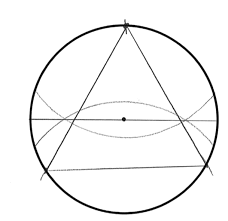
Do a regular triangle when I know one side.
Do a regular triangle when I know the radius.
Do the rhombus when I know 2 diagonals.
Do the rhomboid when I know 2 sides and the angle A.
Do a pentagon when I know one side.

Do a pentagon when I know the radius.
Do a hexagon when I know the side.
Do a hexagon when I know the radius.
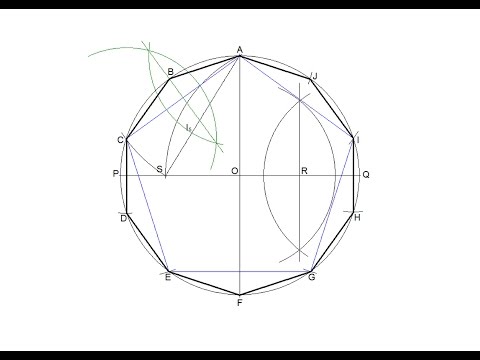
Do a heptagon when I know the radius.
Do a octogon when I know the radius. video
Do a decagon when I know the radius.
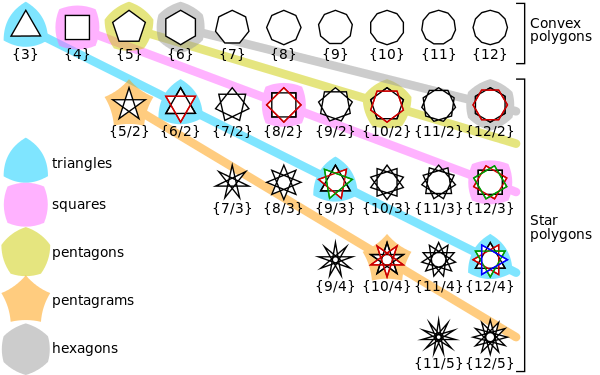
Stars polygons
BASIC ELEMENTS ET VISUAL REPRESENTATION
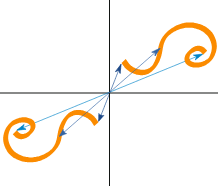
Symmetry: it is aqually of some shapes which some of their parts are reflections of others
Types of symmetry:
axis center

Reflection symmetry: It is a shape quality which is formed by two halves facing each other with an axis or fold line in between as if both side were mirror imagesnof each other.
Symmetry axis: It is a line which divides a shape in two aymmetry halves. Every element are the same distancefrom the axis.
Dot: It is a smallest and mot simple element in art expression. Its fiest target is to indicate a position since it doesn't follow any direction. It may have different qualities size, shape and color
The dot three dimensional capacity: When the size, shape and color are changed, the dot can create visual sensation of spacial deepress and volumen.
The dot expresive capacity: the point has a unlimited capacity to represent images and to express ideas a emotions. To do so, unusual effect are used.
Optical mix: When colors are mixed with the help of distance. Point isn't mixed on the pointing. The captical mix was used fiets by the pointillistes.
Lines: It can be definited as a dot in movement. It has position and direction in the space and one of its principal function consists on marking the shapes outlines.
- zig-zag or broke lines: They are formed by several fragments of straight lines.

- wavy line: they are formed by several fragment or curved line.

- Curly lines: they hold more curves than way lines and show lops.

- Scribed: chotic or meaningless lines that are traced randomly, usually in first stages of chifhood or to fill in some area with a particule texture.
- Hatching: It is a way of shading or giving tones to the areas of oblects or surfaces with parallel lines.

- Cross-hatching: It is a way of shading areas of a drawing or surfaces with parallel lines in several directions.

- Dashed or detted lines: they are lines which are not continuos, formed by little braces or dots.

- Blurred: They are very soft or vanished so they are hard to see and opposite to intense and deep.


Simple lines: Those that are formed by only one line.

Composite lines: They are lines composed by fragments or several straight a curved lines.


EXPRESIVE OF LINES:
- Vertical lines espressivenes: the express an ascenden movement, depending on how they are used.
- Horizontal lines espressiveness: they produced visual feelings of stability and columness or tranquility but they can be monotone if they used to much.
- Skew lines expressiveness: they produced unsteading and movement feeling; these feeling give inclined lines and sensation of dynamism.
Subscribe to:
Posts (Atom)